

TL;DR: In-house call centers give you direct control over scripting, training, and quality assurance, but they carry the highest fixed labor costs and leave gaps during off-hours, holidays, and high-volume days. Outsourced answering services provide human coverage without employees, but many lack native PMS integration, forcing re-entry of details. AI call centers handle concurrent calls so callers never hit a busy signal, sync bidirectionally with Yardi and AppFolio, and use subscription pricing that stays predictable as volume grows. Contact Bevado for current volume discounts. Under 500 units, outsourced or AI fits. Past 500, AI removes data-entry labor outsourced models hide.
Every property management portfolio faces the same coverage math: calls arrive 24/7, but onsite teams work business hours. The three ways to close that gap are in-house staffing, outsourced answering services, or AI call centers, and each carries a different cost per door. Choosing the wrong model shows up as either excessive labor expense in your NOI or vacancy loss from missed leasing opportunities that extend days-to-lease.
This article compares the three models on the metrics that matter to portfolio operators: cost per door, after-hours reliability, and PMS integration depth. You will find a decision framework to match each model to your portfolio scale, plus a cost comparison table and integration matrix to help you make a defensible coverage recommendation.
Standardizing inbound lead and service handling
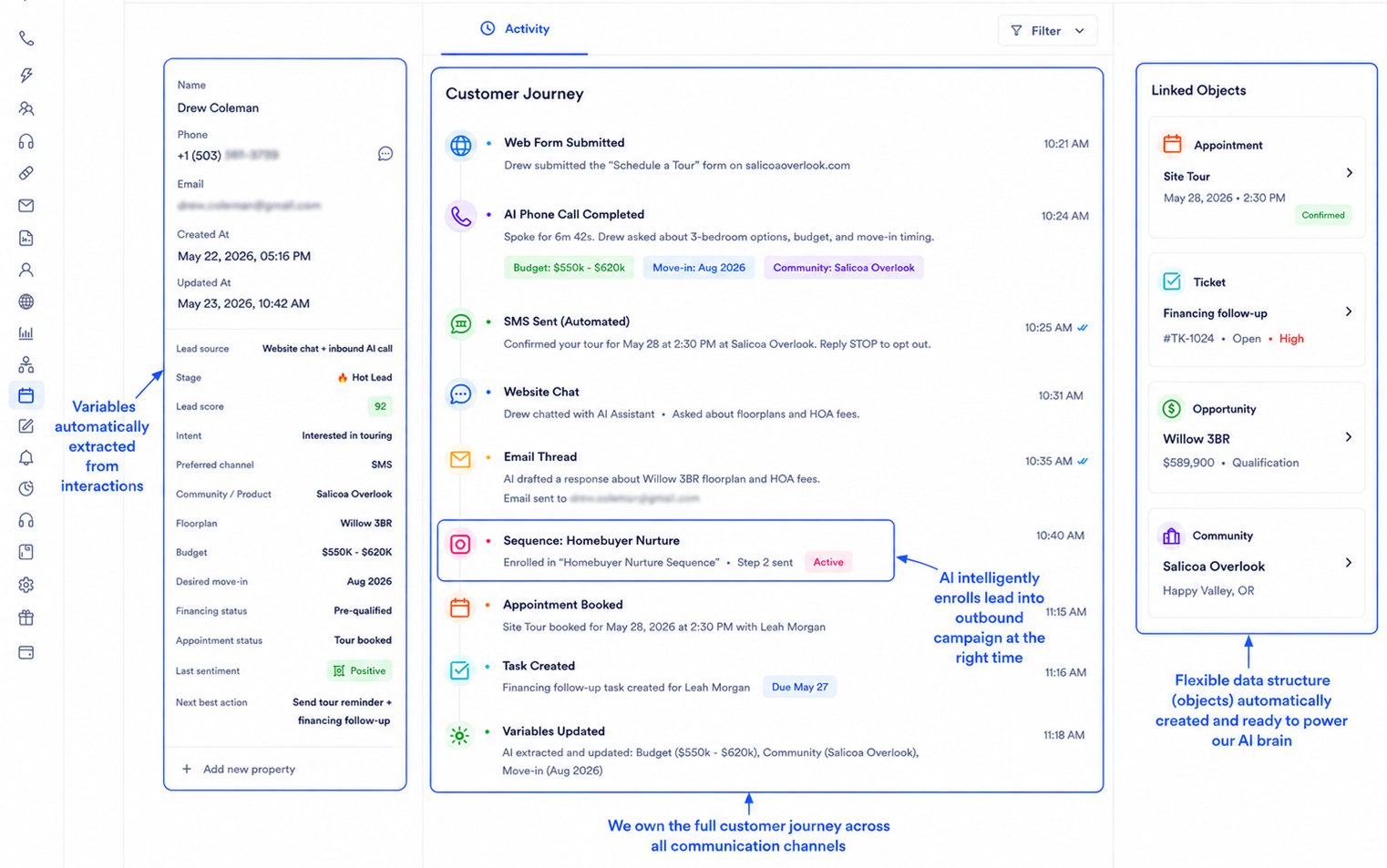
Inconsistent call handling shows up in your leasing pipeline and work order queue: a missed tour request extends days-to-lease, and a misrouted maintenance call delays the repair. Whether a prospect calls about a two-bedroom unit or a resident reports a leaking water heater, your call handling model determines how quickly and accurately that inquiry moves through your leasing pipeline or work order system.
Automating routine resident inquiries
Routine calls consume a disproportionate amount of staff time. Questions about office hours, parking policies, or application status should not require a human agent at 9 PM. An effective property management call center strategy uses automation to handle these FAQs instantly, freeing your team to focus on high-value interactions that require judgment. When comparing coverage models, ask whether each can resolve a routine inquiry, such as an application status check, without handing it back to your staff.
Handling inquiries outside business hours
Rental leads often arrive outside the 9-to-5 window, yet most onsite teams stop answering phones at 5 PM. A prospect who reaches voicemail after hours often calls the next property on their list rather than leaving a message. Your coverage model determines whether those after-hours inquiries enter your leasing pipeline or go to a competitor.
Managing leasing vs maintenance requests
Leasing inquiries require immediate scheduling to prevent drop-off, while maintenance requests need accurate triage to distinguish emergencies from routine work orders. Your call center model must recognize the difference between a prospect wanting to tour tomorrow and a resident with no heat tonight, then route each appropriately. That routing keeps your team from spending its first productive hour of the day on message triage.
In-house property management call center
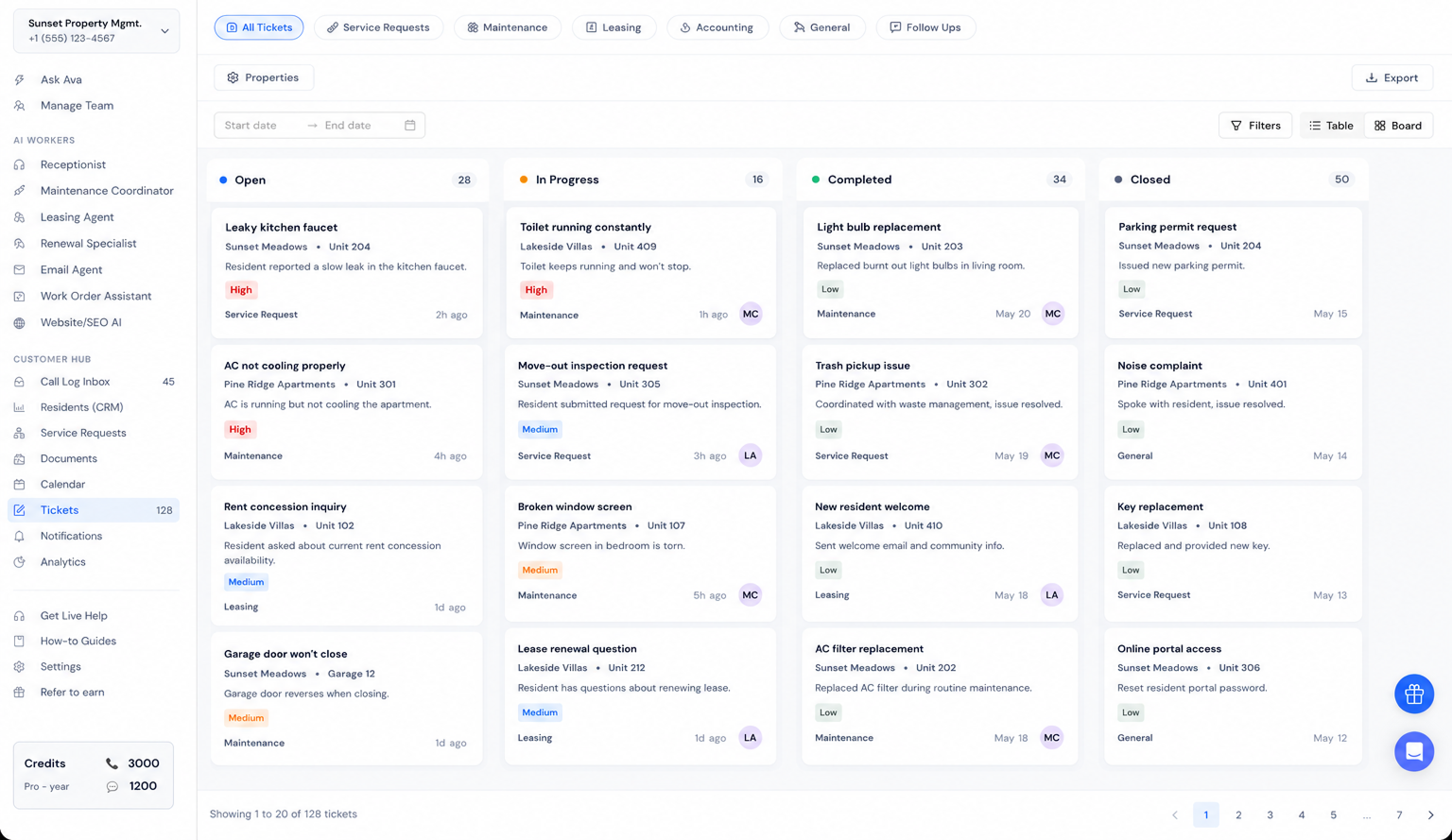
Running your own call center gives you direct control over scripting, training, and quality assurance. Your team learns your properties intimately and can handle complex resident situations with institutional knowledge that outside vendors lack. However, this control comes at a significant operational cost that shows up directly in your cost per door calculations.
Calculating the true cost per door
The Bureau of Labor Statistics reports a median wage of $21.53 per hour for customer service representatives based on May 2025 data. After adding benefits and overhead, Call Force Global estimates the fully loaded onshore cost at $35 to $48 per hour and notes this is an estimate rather than a published benchmark. A single hire covers business hours only, so extending in-house coverage to nights, weekends, and holidays requires overtime pay or additional staff, which makes continuous in-house coverage the most expensive of the three models on a per-door basis.
Labor represents your largest controllable operating expense. When you build an in-house call center, you commit to fixed labor costs that persist regardless of call volume fluctuations, and those costs hit your NOI whether call volume is high or low.
Managing after-hours maintenance emergencies
In-house teams handle after-hours emergencies through on-call rotations or overtime pay. When a water intrusion call comes in at 2 AM, someone must answer, assess severity, and dispatch a vendor. If that person is an onsite manager working overtime, you are paying premium rates for triage work that delays their next-day productivity. Additionally, single points of failure emerge when your designated on-call person is unavailable or overwhelmed by concurrent emergencies.
Scaling internal staff for leasing
Adding leasing coverage requires adding headcount, which creates fixed costs that do not flex with seasonal volume. During peak leasing season, you need more coverage, but during winter months, that staff represents idle capacity. This fixed-cost structure makes in-house staffing the most expensive model for handling fluctuating call volumes across a growing rent roll.
Outsourced services for 24/7 leasing support
Outsourced answering services provide human coverage without the benefits and management overhead of direct employees. These services handle calls on behalf of multiple clients, which spreads their labor costs across a larger volume base than most individual property management companies generate.
Calculating your per-door service cost
Outsourced services typically charge by the minute or by the call, with rates that vary by provider, service level, and included features. Per-call pricing generally ranges from $1 to $11 per call. Because billing accrues per minute or per call, your monthly spend for after-hours emergency coverage depends directly on your call volume and service level requirements.
Some providers quote flat monthly rates instead. For example, a 200-unit operator paying $1,100 monthly for human answering service pays $5.50 per door, whereas an AI subscription model can lower per-door cost depending on volume. However, the human service still requires staff to process messages manually, adding hidden labor costs to the apparent savings.
Ensuring 24/7 leasing and maintenance coverage
Reputable answering services staff their operations 24/7, which eliminates your after-hours coverage gap. However, quality varies significantly between providers. Some services offer dedicated agents trained on your specific properties, while others route calls to generalists who follow generic scripts. Bevado compares service levels across different provider types in a video on choosing the right answering service, covering the evaluation criteria for each.
Criteria for outsourcing leasing calls
When evaluating outsourced property management call center services, verify their escalation protocols for emergencies and their ability to book showings directly into your calendar. Most importantly, confirm whether they can create work orders directly in your PMS or if they simply take messages that your team must manually enter later. Without native integration, you are paying for message-taking, not for work orders created or showings booked.
Automating resident inquiries with AI call centers
AI call centers use voice agents to handle inbound calls, qualifying leads and creating work orders without human intervention. Unlike traditional answering services, AI platforms integrate directly with your property management software to update records in real time rather than leaving messages for staff to process.
Unit economics of AI call support
Property-specific AI voice agents with PMS integration are typically priced as subscriptions that vary with your unit count and feature requirements. This pricing structure often results in a lower cost per door than human alternatives, particularly for portfolios with high daily call volume. Unlike per-minute outsourced models, AI subscription costs remain predictable regardless of concurrent call volume.
Z&A Management reports roughly 75% lower call-handling cost after switching to AI coverage. That result reflects Z&A's peak periods of 400 to 500 calls per day, a volume well above what a typical property management portfolio handles, so run the per-door math on your own call volume before expecting comparable savings. Similarly, Zest Properties increased leasing showings by 300% while cutting delinquency outreach time from 32 hours a month to five minutes, demonstrating that AI coverage drives both cost reduction and revenue recovery.
Eliminating after-hours voicemail
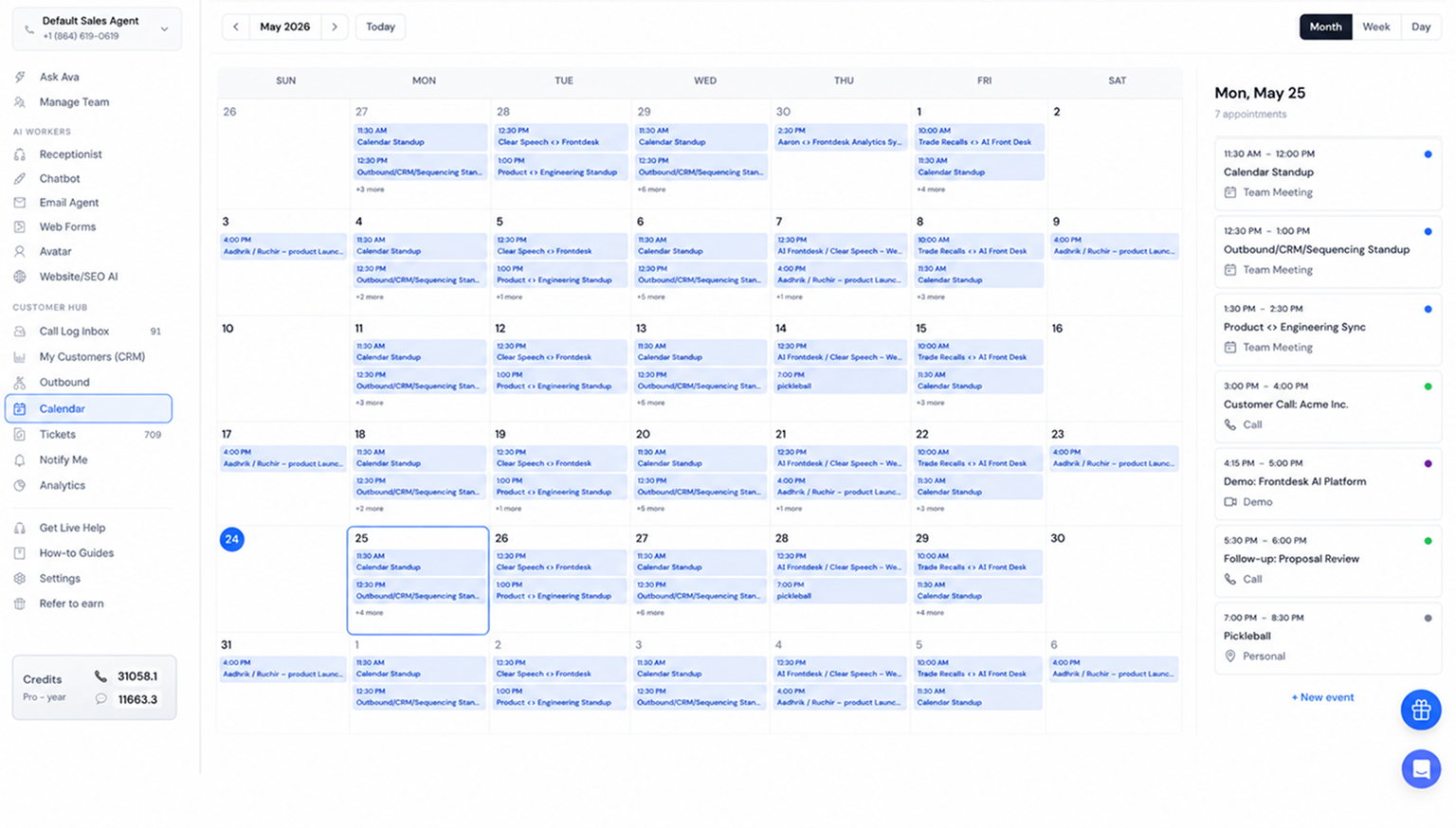
AI coverage handles multiple concurrent calls without hold times or voicemail, so callers never hit a busy signal. When a prospect calls at 9 PM Saturday, the AI answers immediately, qualifies their intent, and books the showing directly into your calendar. Bevado explains the mechanics in a video on what AI leasing assistants do, demonstrating how the system distinguishes between leasing and maintenance calls.
When to use AI for leasing calls
AI handles high-volume, routine leasing inquiries most effectively. It captures prospect information, answers questions about amenities and pricing, and schedules tours. However, you should configure clear escalation rules for complex situations requiring human judgment, such as fair housing questions or current resident disputes that involve legal implications.
Operational tradeoffs: Staffing vs outsourcing vs AI
Each model carries distinct operational implications for your P&L and your team's daily workload. The right choice depends on your portfolio size, call volume, and tolerance for managing vendor relationships versus direct employees.
Analyzing cost per door by model
| Model | Cost structure | Setup complexity | After-hours reliability |
|---|---|---|---|
| In-house | Highest of the three models (fixed labor) | Hiring, training, and scheduling staff | On-call rotations and overtime outside business hours |
| Outsourced | Varies with call volume and service level | Scripting and vendor onboarding | 24/7 staffing, though quality varies by provider |
| AI Call Center | Custom subscription | Self-serve setup, live in days | High (concurrent call handling) |
In-house costs include benefits, training, and management overhead. Outsourced costs fluctuate with call duration and volume. AI costs remain predictable regardless of concurrent call spikes during move-in season or maintenance emergencies.
Reliability of in-house vs outsourced calls
In-house teams provide the highest context for complex resident issues but create single points of failure when key staff are unavailable. Outsourced services offer redundancy through larger agent pools but lack deep knowledge of your specific properties and policies.
AI systems provide consistent availability and follow your exact protocols every time, though they require upfront configuration to recognize your specific terminology and escalation triggers. For sensitive situations involving evictions or fair housing concerns, route those calls to licensed staff immediately, because human agents handle empathy and legal nuance better than AI.
Syncing with Yardi, AppFolio, and Buildium
Integration depth determines whether your call center reduces work or creates it. Bevado maintains native bidirectional integrations with Yardi, AppFolio, RealPage, Rent Manager, Buildium, Entrata, Knock CRM, ResMan, MRI Software, and DoorLoop. Work orders open, update, and close straight from resident phone calls without manual entry.
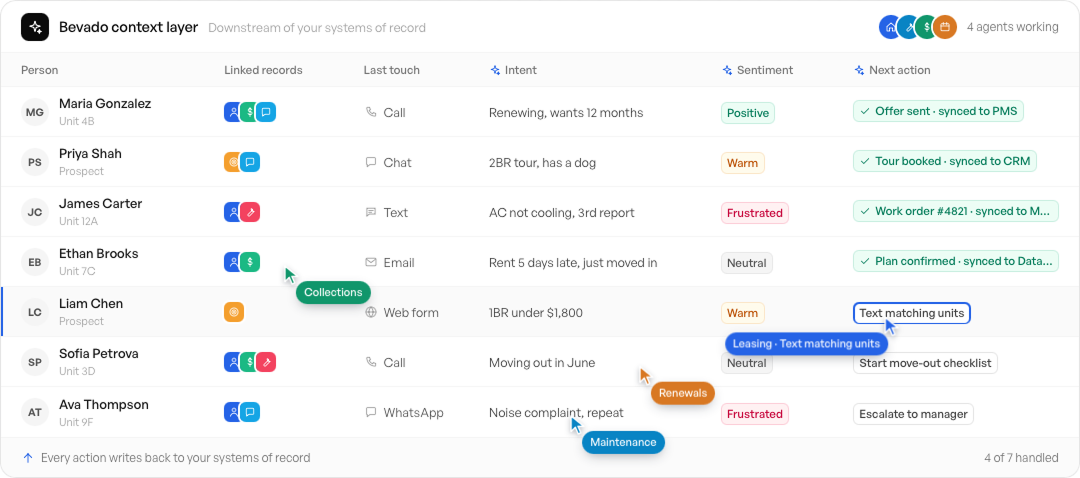
Most outsourced services lack native PMS connectors, forcing staff to manually transfer call notes into your system. AppFolio, Buildium, and Yardi all offer APIs, but third-party answering services rarely use them for real-time data exchange. This integration gap creates a hidden labor cost where your team re-enters data that should flow automatically from the call center to the rent roll.
Managing call volume across portfolios
AI handles multiple concurrent calls at once, eliminating busy signals during high-volume periods like the first of the month or severe weather events. In-house teams hit capacity limits quickly, and outsourced services often charge overage fees when call volumes spike beyond contracted minutes.
Bevado currently supports property management customers with portfolios exceeding 30,000 units, demonstrating that AI coverage scales without the linear cost increases associated with adding human seats.
Criteria for choosing your call coverage strategy
Selecting the right model requires honest assessment of your current operations and growth trajectory. Use this framework to match your portfolio characteristics to the appropriate coverage strategy.
Calculate your cost per door
Divide your total monthly call handling costs by your unit count. Include fully loaded labor costs for in-house staff, total monthly invoices for outsourced services, or subscription fees for AI platforms. If your current cost runs above the roughly $1 to $2.50 per door that published outsourced plans imply and you still miss calls, you have identified your first improvement target.
Quantify your after-hours call volume
Review your phone system logs to determine what percentage of calls arrive outside business hours. If only a small share of your calls arrive after hours, an in-house solution with limited overtime may suffice. If a substantial share of your leasing inquiries arrives evenings and weekends, you need a model designed for 24/7 coverage.
Match models to your portfolio scale
Portfolios under 500 units often weigh outsourced answering services for the human touch, but AI-first coverage with human escalation handles that same volume without per-minute billing. Portfolios between 500 and 2,000 units should evaluate AI coverage to handle increasing volume without adding headcount. For portfolios above 2,000 units, AI subscription economics may offer the strongest cost predictability, since AI subscription pricing tends to suit operators with consistent monthly volume above 300 calls, and native PMS integration eliminates the manual data entry that plagues high-volume outsourced relationships.
Contact Bevado for current volume discounts or a custom plan scoped to your specific call volume and integration requirements.
FAQs
What is the average cost per door for property management call centers?
In-house coverage typically carries the highest per-door cost, because fixed labor costs don't flex with unit count. A common industry benchmark for outsourced after-hours coverage is roughly $1 to $2.50 per door per month, based on published per-unit and per-minute plans, while AI platforms use subscription pricing, so the effective cost per door can decrease as your portfolio grows. Contact Bevado for current volume discounts.
How do AI call centers handle after-hours emergencies?
AI systems follow approved playbooks to separate routine requests from emergencies. When detecting emergency keywords like "flooding" or "no heat," the AI immediately escalates to your designated on-call team with the conversation transcript and location details attached, while providing the resident with immediate safety instructions.
Which call center model integrates with Yardi and AppFolio?
AI call centers with native PMS integrations sync bidirectionally with Yardi, AppFolio, Buildium, and other major platforms to create work orders and update guest cards automatically. Most outsourced services and in-house teams require manual data entry to update these systems after calls end.
What percentage of property management calls occur after hours?
A substantial share of rental leads arrives outside the 9-to-5 window, including evenings, weekends, and lunch hours, when onsite teams are typically unavailable. Because published percentages vary, reviewing your own phone system logs is the most reliable way to quantify your after-hours call volume.
Can AI call centers replace in-house leasing agents?
AI handles routine inquiries, scheduling, and work order creation, but human agents remain necessary for complex negotiations, fair housing compliance questions, and sensitive resident situations. Most operators use AI for after-hours and overflow coverage while maintaining lean in-house teams for business hours and escalations.
Key terms glossary
Cost per door: Total monthly call handling expenses divided by the number of units in your portfolio, used to compare efficiency across staffing models.
Days-to-lease: The number of days between unit availability and signed lease, directly impacted by how quickly you respond to and schedule after-hours inquiries.
AI voice agent: An automated phone system that uses conversational AI to answer calls, qualify leads, create work orders, and schedule appointments without human intervention.
Self-updating CRM: A customer relationship management system that automatically transcribes calls and maps extracted details to resident records without manual data entry.
Work order: A formal record of a maintenance request created in your property management software, tracking the issue from initial report through vendor completion and resident verification.
Rent roll: A comprehensive list of all rental units, current tenants, lease terms, and payment status, which your call center should reference to provide accurate information to residents and prospects.


